
The History of Anabolic Steroids in Bodybuilding
Bodybuilding has always been about pushing the human body to its absolute limits. From the early strongmen of the 19th century to today’s modern mass monsters, athletes have searched for ways to get bigger, stronger, and leaner. Among the most controversial tools in that journey are anabolic steroids.
Understanding the history of steroids in bodybuilding helps us see how the sport evolved, why certain physiques dominated in different eras, and why steroids remain such a hotly debated topic.
The Birth of Modern Bodybuilding
The roots of bodybuilding go back to the late 1800s, with figures like Eugen Sandow, often called the “father of modern bodybuilding.” Back then, muscle was built through basic strength training, heavy eating, and discipline—there were no performance enhancers. Physiques looked athletic but natural, nowhere near the dense, grainy muscle seen on today’s professional stage.
The Discovery of Testosterone
The first step toward steroids came in the 1930s, when scientists successfully isolated and synthesized testosterone. Originally used to treat hypogonadism and other medical conditions, testosterone quickly revealed its ability to build muscle mass, increase recovery, and enhance overall performance. This opened the door to anabolic steroids being developed for both clinical use and athletic performance.
The First Athletes to Experiment
By the 1950s, anabolic steroids were no longer a secret. Reports suggest that Soviet Olympic lifters were using testosterone to gain an edge, prompting American athletes to seek their own versions. This led to the development of anabolic derivatives like Dianabol (methandrostenolone), which quickly became a staple in strength sports.
The Golden Era of Bodybuilding (1960s–1970s)
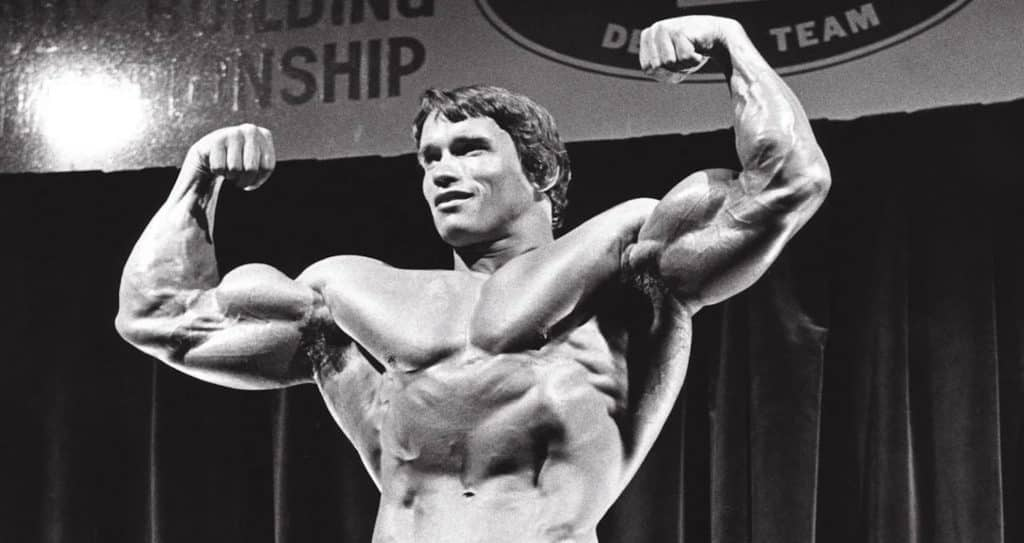
The 1960s and 1970s are often called the “Golden Era” of bodybuilding. Legends like Arnold Schwarzenegger, Franco Columbu, and Frank Zane built physiques that were muscular yet aesthetically balanced. Steroids were widely available but not yet illegal, and their use was often an open secret in gyms. Compounds like Dianabol, Deca-Durabolin, and Primobolan were popular choices, helping athletes build size without the extreme mass of today’s bodybuilders.
This era defined the classic bodybuilding look—wide shoulders, small waists, and sculpted muscle. Steroids helped, but training discipline and diet still took center stage.
The Rise of Mass Monsters (1980s–1990s)
As bodybuilding entered the 1980s, physiques began to change. Athletes started chasing not just aesthetics but sheer size and density. The introduction of more advanced anabolic steroids, combined with human growth hormone (HGH) and insulin in the 1990s, produced a new breed of bodybuilders.
Figures like Lee Haney, Dorian Yates, and later Ronnie Coleman pushed the boundaries of muscle mass. The physiques became grainier, harder, and much larger—something that would have been unimaginable in Sandow’s or even Arnold’s time.
The Crackdown and Steroid Stigma
By the late 1980s, governments began cracking down on anabolic steroids. In the US, the Anabolic Steroid Control Act of 1990 made them controlled substances. Testing was introduced in some sports, but bodybuilding—especially at the professional IFBB level; remained largely untested.
The public perception of steroids grew increasingly negative, especially after media coverage linked them to health risks and scandals in professional sports. Despite this, bodybuilding continued to embrace enhanced physiques.
The 2000s and Beyond: Health Risks in the Spotlight
With mass monsters dominating the stage, health consequences became harder to ignore. Enlarged organs, cardiovascular problems, and sudden deaths in bodybuilding circles sparked debates about whether the sport had gone too far. Still, anabolic steroids remained central to the top level of the sport, even as natural bodybuilding federations emerged to offer a drug-tested alternative.
Steroids in Amateur Bodybuilding
Outside the professional stage, steroid use trickled down to gyms worldwide. Many recreational lifters experimented with cycles to accelerate progress. Underground labs grew in number, making access easier than ever, though often at the expense of safety and product quality.
Modern Bodybuilding: Two Worlds
Today, bodybuilding exists in two parallel realities:
- Enhanced bodybuilding – where steroids, HGH, and other compounds are the norm, producing freakish size and conditioning.
- Natural bodybuilding – where drug-tested athletes aim for aesthetics, symmetry, and longevity without chemical enhancement.
Both sides have their followings, but the shadow of steroids remains over the sport’s history.
Why Steroids Changed Bodybuilding Forever
Anabolic steroids didn’t just change physiques—they changed expectations. The benchmark for what a “great body” looks like has shifted dramatically since Sandow’s day. Steroids made it possible to maintain extreme muscle mass year-round, recover faster, and push training intensity further than natural limits allow.
Looking Ahead
As we move into 2025 and beyond, the conversation around steroids continues. Some advocate for more transparency, harm reduction, and medical supervision, while others call for stricter bans. But one thing is clear: anabolic steroids will always be part of bodybuilding’s DNA.
FAQs
When were anabolic steroids first used in bodybuilding?
Steroids entered bodybuilding in the 1950s, shortly after testosterone derivatives like Dianabol became available.
Did Arnold Schwarzenegger use steroids?
Yes, Arnold has admitted to using steroids during his competitive career, though the doses were smaller compared to today’s standards.
What was the Golden Era of bodybuilding?
The 1960s–1970s, when physiques were muscular but aesthetic, with athletes like Arnold, Zane, and Columbu leading the way.
Are steroids legal in the UK?
In the UK, possession for personal use is legal, but selling or supplying steroids without a prescription is illegal.
Can bodybuilding exist without steroids?
Yes, natural bodybuilding federations exist, but the extreme mass seen on the Olympia stage would not be possible without enhancements.
About the Author


