
Dianabol is one of the most recognised names in bodybuilding, and one of the most misunderstood. Developed in 1955, it remains the most widely used oral anabolic steroid globally among recreational gym-goers, yet the gap between what it promises and what it costs your body is enormous. This guide gives you the complete picture: what Dianabol actually is, what it does, why people use it, and every major side effect you need to know about before making any decision.
What Is Dianabol? A Straightforward Explanation
Dianabol is the brand name for methandienone (also written as methandrostenolone), a synthetic anabolic-androgenic steroid (AAS) derived from testosterone. It was developed in 1955 by Dr John Ziegler, working with the US Olympic team, specifically to help American athletes compete against Soviet weightlifters who were widely believed to be using testosterone at the time.
Methandienone became popular almost immediately for its ability to produce rapid gains in muscle mass and strength within weeks. It is an oral steroid, which contributes significantly to its appeal. No injections, quick results, and a relatively short half-life of 3 to 5 hours make it a common choice for the start of a bulking cycle.
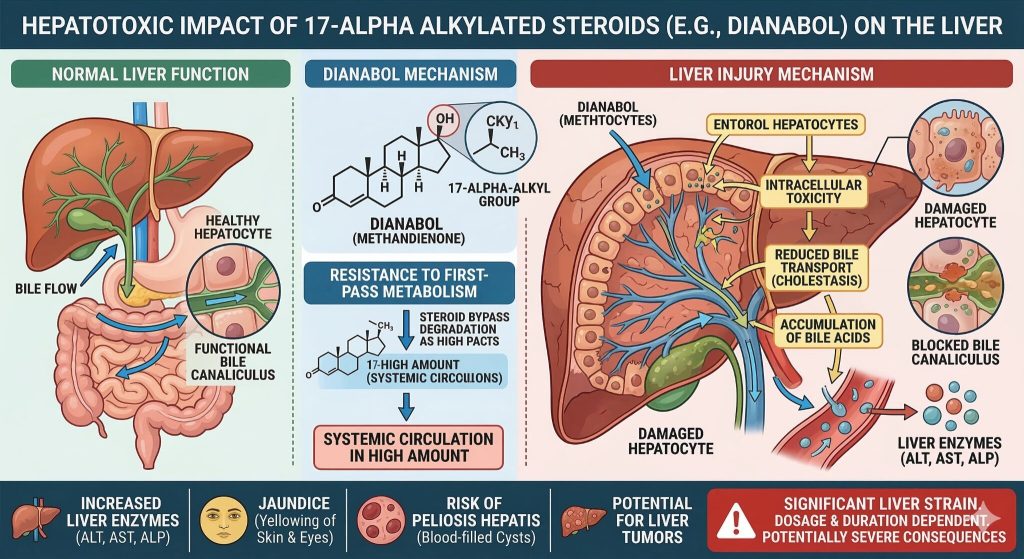
Structurally, Dianabol belongs to the 17-alpha alkylated (17-aa) group of steroids. This modification prevents it from being broken down during the first pass through the liver after oral ingestion, which means it stays active in the bloodstream long enough to have its anabolic effect. It also means the liver has to work substantially harder to process it, which is the source of one of Dianabol’s most serious risks.
Dianabol is a Class C controlled substance in the UK under the Misuse of Drugs Act 1971. Supplying, manufacturing, or importing it is a criminal offence. Personal possession is not a criminal offence, but importation by post or courier for personal use is prohibited.
How Does Dianabol Work in the Body?
Dianabol works by binding to androgen receptors inside muscle cells. When the compound binds to these receptors, it activates genetic pathways that increase the rate of protein synthesis, which is the process your muscles use to repair and grow after training. At the same time, it enhances nitrogen retention inside muscle tissue. Nitrogen is a key marker of an anabolic environment: the more nitrogen a muscle holds, the greater its capacity for growth.
Dianabol also increases glycogen storage in muscle cells, which improves energy availability during training and helps users push harder for longer. The combined effect of elevated protein synthesis, improved nitrogen retention, and better glycogen storage produces the rapid strength and size gains Dianabol is known for.
Additionally, Dianabol has a strong aromatisation rate. It converts to oestrogen through the aromatase enzyme at a significant rate, which contributes to both water retention and the risk of gynaecomastia (male breast tissue development). This is a key reason why Dianabol cycles are often combined with aromatase inhibitors (AIs) by experienced users trying to manage oestrogen-related side effects.
Dianabol Uses: Why Do People Actually Take It?
Despite its risks, Dianabol is used for specific goals in bodybuilding and strength training:
- Rapid bulking and mass gain: Dianabol is most commonly used at the start of a bulking cycle to produce fast size and strength increases while longer-acting injectable steroids take effect. Gains of 4 to 8 kg of bodyweight in 4 to 6 weeks are commonly reported, though a significant portion of this is water retention rather than dry muscle mass.
- Strength plateaus: Powerlifters and strength athletes have historically used Dianabol to break through training plateaus, increasing lifting numbers within weeks.
- Cycle kickstart: Because injectable testosterone takes 3 to 4 weeks to reach full effect, Dianabol is used as a kickstart compound in longer cycles. It provides rapid results while the injectable builds up.
- Recovery enhancement: Some users report faster recovery between sessions due to enhanced protein synthesis and nitrogen retention.
It is worth being clear: none of these uses are medically sanctioned in the UK. Dianabol has no current MHRA licence and no legitimate clinical application in British medicine. Any use is recreational and carries full legal and health risk. If muscle and performance gains are your goal, our guide to legal steroid alternatives for muscle growth in the UK covers evidence-backed options that do not carry these risks.
Dianabol Side Effects: The Complete Breakdown
This is the section most people search for, and it deserves a thorough, honest answer. Dianabol has one of the most extensive side effect profiles of any commonly used oral anabolic steroid.
1. Liver Toxicity
This is the most serious and most consistent risk. Because Dianabol is 17-alpha alkylated, it resists breakdown in the liver and stays active in the blood longer. The trade-off is that the liver must process a far greater chemical burden than it would with non-alkylated androgens. Prolonged use leads to elevated liver enzymes, which indicate hepatocellular stress. In sustained high-dose use, outcomes can include peliosis hepatis (blood-filled cysts in the liver), cholestatic jaundice, and in extreme long-term cases, hepatocellular carcinoma. Regular liver function testing during any Dianabol cycle is essential.
2. Testosterone Suppression
A widely cited study titled Dianabol Insights: Unique Characteristics of Anabolic-Androgenic Steroids found that a daily dose of just 15 mg of methandienone for two months suppresses circulating testosterone by approximately 69%. When your own testosterone is suppressed, the downstream effects include reduced libido, difficulty with erections, testicular atrophy, mood deterioration, and temporary infertility. Recovery after a cycle can take months and is not guaranteed to be complete without post-cycle therapy.
3. Gynaecomastia
Dianabol has one of the highest aromatisation rates among anabolic steroids. This means a meaningful proportion of the methandienone in your system converts to oestrogen. Elevated oestrogen in men drives breast tissue development (gynaecomastia), which can become permanent if not addressed early. Many users incorporate aromatase inhibitors (AIs) such as anastrozole or letrozole during a Dianabol cycle specifically to manage this risk.
4. Water Retention and Bloating
The combination of oestrogen elevation and sodium retention causes notable water retention on a Dianabol cycle. This is partly responsible for the rapid weight gain users see and is often mistaken for pure muscle. Excess fluid retention increases blood pressure and creates a puffy, bloated appearance. It resolves after the cycle ends, but the cardiovascular strain during the cycle is real.
5. Cardiovascular Effects
Dianabol consistently worsens lipid profiles. LDL (bad) cholesterol rises, while HDL (good) cholesterol falls significantly. This shifts the cardiovascular risk profile in the wrong direction. Combined with elevated blood pressure from water retention and increased blood viscosity (thicker blood from elevated red blood cell production), the cardiac stress during a Dianabol cycle is considerable. This is not a theoretical risk; multiple case studies link long-term oral AAS use to left ventricular hypertrophy and increased stroke risk.
6. Acne and Oily Skin
Dianabol stimulates androgen receptors in sebaceous glands, increasing oil production and the likelihood of acne. The face, back, and chest are most commonly affected. In users with a genetic predisposition to acne, Dianabol cycles can produce severe breakouts that may leave permanent scarring.
7. Androgenic Hair Loss
While Dianabol has a lower androgenic rating than testosterone, it does convert to DHT (dihydrotestosterone) to a limited degree. For men who are genetically predisposed to male-pattern baldness, Dianabol can accelerate hair loss. Unlike some other side effects, this one does not reverse after the cycle ends.
8. Mood Changes and Psychological Effects
A systematic review of 37 clinical studies confirmed a link between anabolic steroid use and mood disorders including aggression, irritability, and anxiety, particularly in predisposed individuals with prolonged exposure. The combination of hormonal fluctuation, elevated androgens, and post-cycle testosterone crashes creates a volatile psychological environment. Dependency is also a real risk with regular Dianabol use.
Dianabol Side Effects Summary Table
| Side Effect | Severity / Likelihood | Recovery Outlook |
| Liver Toxicity | High – 17-alpha alkylated oral steroid | Reversible if caught early; can be permanent |
| Testosterone Suppression | Up to 69% reduction at 15 mg/day for 8 weeks | Recovers post-cycle with PCT; not guaranteed |
| Gynaecomastia | High – strong aromatisation to oestrogen | Managed with aromatase inhibitors (AIs) |
| Water Retention / Bloating | High – oestrogen-driven fluid retention | Subsides after cycle; diet management helps |
| LDL / HDL Cholesterol | LDL rises; HDL drops significantly | Cardiovascular risk; requires monitoring |
| High Blood Pressure | Moderate to high – worsens with fluid gain | Regular BP checks essential during cycle |
| Acne & Oily Skin | Common – androgenic stimulation of sebaceous glands | Usually resolves post-cycle |
| Androgenic Hair Loss | Moderate – DHT conversion in susceptible men | Irreversible in genetically predisposed users |
| Mood Swings / Aggression | Moderate – dose and individual dependent | Worsens with higher doses and longer cycles |
| Temporary Infertility | Common – FSH/LH suppression reduces sperm | Usually recovers post-cycle; PCT advised |
Dianabol and Legal Status in the UK
Dianabol (methandienone) is classified as a Class C controlled substance under the Misuse of Drugs Act 1971 and is listed under Schedule 4 Part II of the Misuse of Drugs Regulations 2001 in the UK.
What this means in practice:
- Personal possession: Not a criminal offence.
- Supply, manufacture, or import with intent to supply: A criminal offence carrying up to 14 years imprisonment.
- Importation by post or courier for personal use: Prohibited and can be seized by UK Border Force.
- Purchase from unregulated online sources: Strongly advised against by the MHRA due to widespread counterfeiting and contamination.
Dianabol is also on the WADA prohibited list, meaning any athlete in a tested sport who uses it faces suspension. For a broader picture of the UK legal landscape around anabolic steroids, see our guide on buying steroids in the UK: what you should know.
Can Dianabol Side Effects Be Managed?
Users who choose to take Dianabol typically attempt to mitigate its risks through several measures. It is important to understand what works, what does not, and what no amount of management can fully prevent.
- Liver support supplements: TUDCA (tauroursodeoxycholic acid), NAC (N-acetyl cysteine), and milk thistle are commonly used during oral steroid cycles to reduce hepatic stress. They lower but do not eliminate liver risk, and do not substitute for blood tests.
- Aromatase inhibitors (AIs): Anastrozole or letrozole can reduce oestrogen-related side effects like gynaecomastia and water retention. However, crashing oestrogen too low has its own side effects including joint pain and worsened lipid profiles.
- Blood pressure monitoring: Regular BP checks throughout a cycle are essential. If blood pressure rises significantly, reducing sodium intake and stopping the cycle should be considered.
- Post-cycle therapy (PCT): Clomid (clomiphene) or Nolvadex (tamoxifen) are used after a Dianabol cycle to stimulate natural testosterone recovery. PCT can shorten the recovery window but does not guarantee full hormonal restoration.
- Cycle length limitation: Most recommendations cap oral Dianabol cycles at 4 to 6 weeks due to cumulative liver strain. Longer cycles significantly increase hepatotoxicity risk.
None of these measures make Dianabol safe. They reduce certain risks while others remain unaddressed. If your goals are muscle building and improved body composition, the best testosterone booster supplements for UK men represent a category of options worth exploring before taking on the risk profile of a Dianabol cycle.
10 Most Asked Questions About Dianabol
1. What does Dianabol do to your body?
Dianabol increases protein synthesis and nitrogen retention in muscle tissue, producing rapid gains in muscle mass and strength. It also causes significant water retention, suppresses natural testosterone production, stresses the liver, worsens cholesterol levels, and elevates blood pressure. Results come quickly but so do side effects.
2. How fast do you see results from Dianabol?
Most users notice strength increases within the first week and visible size changes within 2 to 3 weeks. A significant portion of this early gain is water retention and glycogen, not dry muscle mass. Typical weight gain over a 4 to 6 week cycle is 4 to 8 kg, though actual lean muscle gained is considerably less once the cycle ends and water weight drops.
3. How much does Dianabol suppress testosterone?
Research shows that 15 mg of Dianabol per day for two months suppresses circulating testosterone by approximately 69%. Higher doses produce greater suppression. This is why post-cycle therapy is considered essential by most users, and why symptoms of low testosterone (fatigue, low libido, mood changes) typically follow a Dianabol cycle.
4. Is Dianabol bad for your liver?
Yes. Dianabol is one of the most hepatotoxic oral steroids available due to its 17-alpha alkylated structure. It consistently elevates liver enzymes during use. Prolonged or high-dose use can cause peliosis hepatis, cholestatic jaundice, and in severe chronic cases, liver cancer. Liver function tests before, during, and after a cycle are strongly recommended by anyone using it.
5. Does Dianabol cause permanent side effects?
Some Dianabol side effects are reversible with time and post-cycle therapy, including water retention, testosterone suppression, and cholesterol changes. Others can be permanent or long-lasting: male-pattern baldness accelerated by DHT activity does not reverse, severe gynaecomastia may require surgery, and significant liver or cardiovascular damage sustained during cycles can have lasting consequences.
6. Can Dianabol cause gynaecomastia?
Yes, and it is one of the most common Dianabol side effects due to the compound’s high aromatisation rate. Elevated oestrogen from methandienone conversion stimulates breast gland tissue growth. Early signs include nipple sensitivity and tenderness. If not managed with an aromatase inhibitor early enough, gynecomastia can become permanent and may require surgical removal.
7. Is Dianabol legal in the UK?
Dianabol (methandienone) is a Class C controlled substance in the UK. Personal possession is not a criminal offence, but supplying, manufacturing, or importing it with intent to supply carries criminal penalties including up to 14 years in prison. Importing it by post or courier for personal use is also prohibited. It has no current MHRA licence and cannot legally be prescribed or dispensed.
8. What is the difference between Dianabol and testosterone?
Both are anabolic-androgenic steroids that bind to androgen receptors and increase muscle protein synthesis. Testosterone is the natural male hormone; Dianabol is a synthetic oral derivative modified for longer activity and oral bioavailability. Dianabol produces faster initial mass gains but carries much greater liver toxicity. Testosterone is more versatile, injectably administered, and forms the basis of most steroid cycles.
9. What should I do if I experience side effects from Dianabol?
Stop use and consult your GP, being honest about what you have taken. Your doctor can arrange liver function tests, a full blood count, lipid panel, and morning testosterone measurements to assess the damage. If you are experiencing chest pain, shortness of breath, jaundice (yellowing of the skin or eyes), or severe mood changes, seek urgent medical attention. Do not attempt to self-medicate side effects with other unregulated compounds.
10. Are there safer alternatives to Dianabol for muscle building?
Yes. Several categories of legal, safer alternatives exist. Natural testosterone-supporting supplements including zinc, vitamin D, ashwagandha, and fenugreek can support hormonal health without suppression risks. A well-structured progressive overload training programme combined with optimised nutrition and sleep produces genuine muscle gains without the legal and medical risks Dianabol carries. Legal steroid alternatives using plant-based compounds designed to mimic anabolic pathways are another option worth exploring.
Final Thoughts
Dianabol delivers what it promises in the short term. That is precisely why it has been used by bodybuilders and strength athletes for nearly 70 years. But the speed of its gains comes with a genuinely serious risk profile: a liver under sustained chemical attack, a hormonal system that shuts down and may not fully recover, a cardiovascular system pushed in the wrong direction, and a legal status in the UK that means any supply chain you use exists outside the law.
If you are committed to building muscle and improving your physique, it is worth investing real time in understanding what works without these consequences. Our guide to legal steroid alternatives that actually work in the UK is a practical starting point.
Disclaimer: This article is for informational and educational purposes only and does not constitute medical advice. Dianabol is a Class C controlled substance in the UK. Always consult a qualified healthcare professional before making decisions about any supplement or performance-enhancing compound.
About the Author
