

Semaglutide is a prescription medicine that has changed how the world thinks about weight loss and type 2 diabetes. It is the active ingredient in both Ozempic and Wegovy, two of the most talked-about drugs of the last five years.
This article covers everything you need to know: what semaglutide is, how it works, what it treats, how long it takes, its side effects, who should avoid it, and where you can get it in the UK.
What Is Semaglutide?
Semaglutide is a GLP-1 receptor agonist, a drug that mimics a natural hormone your gut releases after you eat. That hormone, glucagon-like peptide-1 (GLP-1), tells your brain you are full, slows digestion, and helps your pancreas release insulin when blood sugar rises.
It was developed by Novo Nordisk and is sold under two main brand names. Ozempic is prescribed for type 2 diabetes. Wegovy is the higher-dose version approved specifically for weight loss. Same molecule, different doses, different labels.
Semaglutide is available as a once-weekly injection. An oral tablet form (Rybelsus) exists for diabetes management, though the injectable versions are far more commonly used for weight loss.
How Does Semaglutide Work?
Semaglutide works by binding to GLP-1 receptors in the brain, gut, and pancreas. Three things happen as a result.
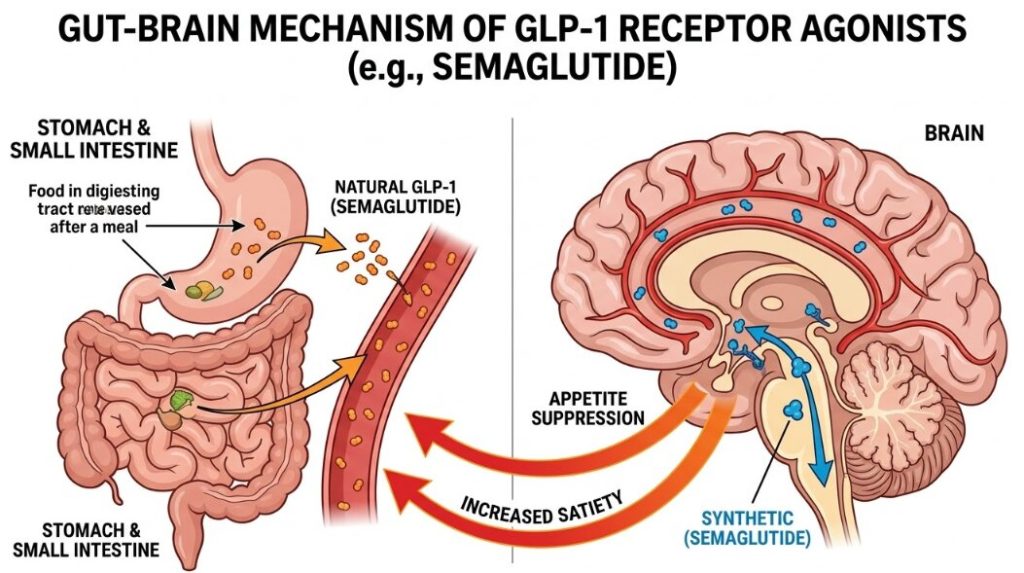
Appetite drops. The brain receives a stronger and longer “I’m full” signal than it does from natural GLP-1. Most people notice they simply do not feel as hungry, lose interest in food sooner, and eat smaller portions without forcing it.
Digestion slows. Food moves from your stomach to your intestine more slowly. This keeps you feeling full for longer after a meal and reduces blood sugar spikes after eating.
Blood sugar is regulated. In people with type 2 diabetes, semaglutide prompts the pancreas to release insulin when blood glucose is high , and stops the pancreas from releasing glucagon (which raises blood sugar) when it is not needed.
Semaglutide does not “burn” fat directly. It works by changing how hungry you feel. Less hunger leads to fewer calories consumed, and fewer calories leads to weight loss.
What Is Semaglutide Used For?
Type 2 diabetes. Ozempic (semaglutide up to 2mg) is approved and commonly prescribed to lower HbA1c and improve blood sugar control in adults with type 2 diabetes, typically alongside diet changes and other medications.
Weight loss. Wegovy (semaglutide 2.4mg) is MHRA-approved in the UK for chronic weight management in adults with a BMI of 30 or above, or 27 and above with a weight-related condition like high blood pressure or type 2 diabetes.
Cardiovascular protection. In July 2024, Wegovy received MHRA approval for a third use: reducing the risk of heart attack and stroke in people with established cardiovascular disease and a BMI of 27 or above. This was based on SELECT trial data showing a 20% reduction in major cardiovascular events.
Off-label use for weight loss in people with lower BMIs is also widespread, though it falls outside approved prescribing guidelines in the UK.
Does Semaglutide Work for Weight Loss?
Yes, and the clinical evidence is unusually strong for a weight loss drug.
In the landmark STEP 1 trial published in the New England Journal of Medicine, participants lost an average of 14.9% of body weight over 68 weeks on semaglutide 2.4mg, compared to 2.4% on placebo. Around 86% lost at least 5% of their body weight, and one in three lost 20% or more.
A large 2025 real-world study of over 8,000 patients found average weight loss of 13.4% at 6 months, 17.6% at 12 months, and 20.3% at 18 months , consistent with trial results.
Important to know: semaglutide works best alongside a calorie-controlled diet and regular activity. It is not a passive fix. And if you stop taking it, weight typically returns , a 2026 Oxford University systematic review found patients regained around 0.8 kg per month after stopping.
How Long Does Semaglutide Take to Work?
Appetite changes are often noticed within the first 1 to 2 weeks, even at the starting dose of 0.25mg. Many people feel less hungry and fuller after smaller meals earlier than they expected.
Visible weight loss typically begins in weeks 3 to 5. Most people see noticeable scale movement within the first month. The dose is increased gradually over 16 to 20 weeks, and weight loss accelerates as the dose rises.
Full effect at the maintenance dose (2.4mg for Wegovy) is usually reached around week 17. Peak results in clinical trials were observed between weeks 52 and 68. The process is gradual by design , and that is actually what makes the results more sustainable than crash diets.
Why Am I Not Losing Weight on Semaglutide?
This is one of the most searched questions around semaglutide, and the answer is almost always one of a few common reasons.
You are still in the dose titration phase. The starting dose (0.25mg) is not a therapeutic weight loss dose. It is a tolerance dose. If you have only recently started, give the dose increases time to take effect.
Calorie intake has not changed enough. Semaglutide reduces appetite , it does not remove it entirely. If eating habits have not shifted meaningfully, weight loss will be minimal regardless of the medication.
You have hit a plateau. This is normal after significant initial loss. Your body adapts its metabolism to match reduced calorie intake. It does not mean the drug has stopped working , it means your body has found a new equilibrium. A review with your prescriber about dose, diet, or activity is the next step.
Individual response varies. A small proportion of people are genuine non-responders. Research suggests this is linked to genetic variation in GLP-1 receptor expression. If there is no weight change after 16 weeks at a therapeutic dose, a prescriber review is appropriate.
Is Semaglutide Safe?
Semaglutide has been through extensive clinical testing. It is MHRA-approved in the UK and has a well-documented safety profile. It is considered safe for most people when prescribed and monitored by a healthcare professional.
The most common side effects are gastrointestinal and tend to be temporary, particularly during dose increases. Serious adverse events are uncommon in clinical trials and real-world data.
Medical supervision matters. The dose titration schedule exists for a reason: going too fast increases side effect severity. Self-prescribing compounded semaglutide from unregulated sources carries significant safety risks, including incorrect dosing and sterility issues.
Who Should Not Take Semaglutide?
Semaglutide is not suitable for everyone. You should not take it if you have any of the following:
- A personal or family history of medullary thyroid carcinoma (MTC)
- Multiple Endocrine Neoplasia syndrome type 2 (MEN 2)
- A history of pancreatitis (inflammation of the pancreas)
- Severe kidney or liver disease
- Type 1 diabetes (semaglutide is not approved for type 1)
- Pregnancy or breastfeeding , weight loss drugs are not recommended during pregnancy
Always disclose your full medical history to your prescriber before starting semaglutide. Drug interactions with other medications, particularly diabetes drugs that affect insulin, also need to be assessed.
Side Effects of Semaglutide
Nausea is the most common side effect, affecting around 44% of users in clinical trials. It is usually mild to moderate and peaks during the first few weeks after a dose increase.
Other common side effects include vomiting, diarrhoea, constipation, stomach cramps, and bloating. These are almost all gastrointestinal and most improve significantly within 4 to 8 weeks.
Does semaglutide make you tired? Fatigue is reported by some users, particularly in the early weeks. It is not among the most frequently documented effects in clinical trials but appears consistently in real-world patient reports. It tends to improve as the body adjusts.
How long do semaglutide side effects last? For most people, the worst of the GI effects resolve within 4 to 6 weeks of reaching a new dose level. If side effects are severe or persistent beyond this, speak to your prescriber about slowing the dose increase schedule.
How to Relieve Nausea from Semaglutide
Eat smaller meals and avoid rich, fatty, or spicy food, especially in the days after your injection. Injecting at night before bed means nausea peaks while you sleep. Ginger tea, staying upright after eating, and eating slowly all help. If nausea is severe, your prescriber can slow the dose titration , this is common and does not indicate a problem.
How to Take Semaglutide: Injection Guide
How often: Once per week, on the same day each week. You can inject at any time of day, with or without food. Most people find evening injections reduce daytime nausea.
Where to inject semaglutide: The front of the thigh, the abdomen (at least 5cm from the navel), or the upper outer arm. Rotate injection sites each week to avoid skin irritation or lipohypertrophy (thickened skin from repeated injections in the same spot).
How to inject semaglutide: Clean the skin with an alcohol wipe. Pinch a small fold of skin. Insert the needle at 90 degrees (or 45 degrees if very lean). Press the injector button and hold for 5 to 10 seconds. Do not rub the site after.
The pen comes pre-loaded and pre-dosed. You do not need to draw up the medication. Follow the instructions provided with your specific brand, as Ozempic and Wegovy pens operate slightly differently.
How Long Does Semaglutide Stay in Your System?
Semaglutide has a half-life of approximately 7 days. This is why it is dosed weekly , a single injection maintains active therapeutic levels in the blood for the full seven-day period.
After stopping semaglutide entirely, it takes approximately 5 to 7 weeks for the drug to clear your system. During this time, you may still experience some appetite suppression and GI effects, though they will gradually reduce.
Blood sugar (in diabetes patients) and appetite typically return toward pre-treatment levels within 4 to 5 weeks of stopping, which aligns with the evidence on weight regain rates.
Semaglutide vs Ozempic vs Wegovy: What’s the Difference?
People often search “is semaglutide the same as Ozempic” or “is Wegovy semaglutide” , and the answer is yes to both. All three are the same active compound. The brand name and dose is what differs.
| Factor | Semaglutide | Ozempic | Wegovy |
|---|---|---|---|
| Active ingredient | Semaglutide | Semaglutide | Semaglutide |
| Brand purpose | Generic name | Type 2 diabetes | Weight management |
| Approved dose | Varies | Up to 2 mg/week | 2.4 mg/week |
| NHS availability | N/A | Yes (diabetes) | Yes (weight clinics) |
| Injection schedule | Weekly | Weekly | Weekly |
Think of it like ibuprofen vs Nurofen. The molecule is identical. The brand, dose, and approved use differ. Your GP or prescriber will recommend the correct brand based on why you need it.
Where Can You Buy Semaglutide in the UK?
Semaglutide is a prescription-only medicine in the UK. You cannot buy it legally over the counter or from a standard supplement shop.
Through the NHS: Wegovy is available via NHS specialist weight management clinics for eligible patients. Your GP can refer you. Ozempic is available via NHS prescription for type 2 diabetes.
Through a private prescriber or online clinic: Several MHRA-registered online pharmacies and private clinics in the UK offer semaglutide following an online consultation and eligibility check. This is legal when done through a licensed prescriber.
Avoid unregulated sources. Compounded semaglutide and grey-market pens sold online without a prescription are not MHRA-approved, carry unknown purity and dosing risks, and are not legal under UK medicines law. The MHRA has issued multiple warnings about counterfeit semaglutide products circulating online.
For context on how the UK regulates prescription medicines and performance compounds more broadly, see our post on buying regulated compounds in the UK: what you should know.
FAQs
Is semaglutide insulin?
No. Semaglutide is a GLP-1 receptor agonist, not insulin. It works by stimulating your pancreas to release its own insulin when blood sugar is high and by suppressing appetite. It does not deliver insulin directly into the body the way insulin injections do.
Can you take orlistat and semaglutide together?
Combining orlistat and semaglutide is not standard medical practice and is not currently recommended. Both affect weight loss through different mechanisms, but there is no strong clinical evidence supporting the combination, and it has not been evaluated for safety in clinical trials. Speak to your prescriber before combining any weight loss treatments.
Does semaglutide make you tired?
Some people report fatigue, particularly in the first few weeks of starting or after a dose increase. It is not the most common documented side effect, but it appears regularly in real-world patient reports. It typically improves as your body adjusts to the medication over 3 to 6 weeks.
What happens if you stop taking semaglutide?
Most people regain weight after stopping semaglutide. A 2026 Oxford University meta-analysis found patients regained approximately 0.8 kg per month after stopping newer GLP-1 drugs, with most returning to baseline weight within 1.5 years. Semaglutide manages obesity rather than curing it , continued use is typically needed to maintain results.
How much weight can you lose on semaglutide?
In clinical trials, the average weight loss was around 15% of body weight over 68 weeks. Real-world data published in 2025 showed 17.6% average loss at 12 months across 8,177 patients. Results vary: about one in three people lose 20% or more, while a small proportion see minimal response.
Disclaimer: This article is for general information purposes only and does not constitute medical advice. Semaglutide is a prescription-only medicine in the UK. Speak to a qualified healthcare professional before starting any new medication.
About the Author
